2026 EV Battery Testing Trends: Micro-Defect Control and Technical Cleanliness Compliance
Driven by the rapid growth of global electric vehicle adoption, the power battery industry has entered a high-precision quality control era in 2026. With worldwide EV sales continuing to rise and penetration approaching 30%, stringent safety and consistency requirements have pushed lithium-ion battery manufacturing to upgrade from traditional dimensional and surface inspection to systematic technical cleanliness management. As the core guarantee for battery safety and long-term reliability, technical cleanliness has become a mandatory compliance indicator for global battery supply chains.
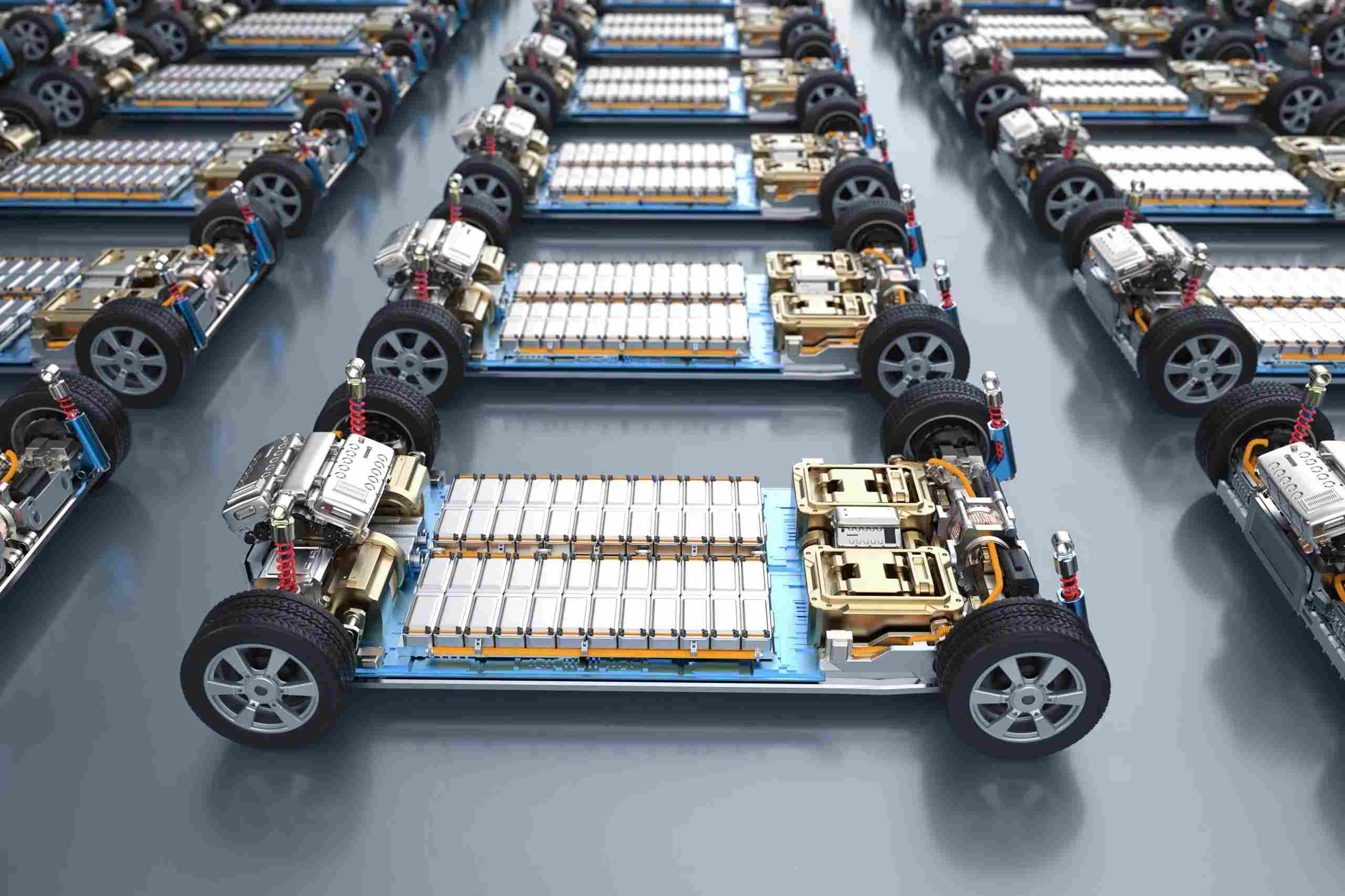
Lithium-ion batteries dominate the EV market due to their lightweight structure, high energy density and high charging efficiency. However, tiny structural defects and residual contaminants are the main causes of micro-short circuits, thermal runaway and battery failure. Industrial data shows that over 40% of battery safety risks are directly related to insufficient technical cleanliness, including foreign particles, metal debris, dust residuals and process pollution generated during production.
A lithium battery consists of current collectors, electrode materials and separators. The separator relies on micron-level pores to allow lithium-ion transmission while blocking electronic short-circuiting. Even tiny conductive contaminants can pierce the separator, causing self-discharge, lithium plating and thermal risks. Therefore, eliminating particulate pollution and stabilizing technical cleanliness levels are essential for mass production quality stability.
In 2026, global automotive and battery standards including ISO 16232, VDA 19.1 and IEST-STD-CC1246 are fully enforced, requiring full-process technical cleanliness control covering raw material incoming, coating, calendaring, slitting, winding, assembly and packaging. Manufacturers must quantitatively monitor particle size, particle count, residual contamination and pollutant distribution to meet international market access thresholds.
Advanced industrial microscopic inspection has become the core method to integrate structural defect detection with technical cleanliness verification, mainly including four key items:
First, current collector and electrode roughness inspection. Appropriate surface roughness ensures coating adhesion and battery capacity stability. Excessively rough surfaces easily retain fine dust and metal particles, forming cleanliness dead zones. Precision roughness testing effectively optimizes surface status and improves overall technical cleanliness.
Second, edge burr detection. Slitting burrs not only cause mechanical short-circuit risks but also produce free metal fragments that seriously damage technical cleanliness. High-magnification microscopic inspection eliminates micro-burr defects and reduces particulate contamination sources.
Third, electrode cross-section analysis. Cross-section observation checks interfacial bonding quality while detecting hidden residual pollutants inside coating gaps, helping manufacturers locate concealed technical cleanliness problems in advance.
Fourth, battery dimensional accuracy measurement. Dimensional tolerances prevent assembly extrusion and separator deformation, avoiding secondary particle wear and contamination that degrade technical cleanliness during mass production.
In 2026, EV battery quality challenges are no longer limited to visible defects. The industry faces stricter requirements for submicron particle identification, full-process contamination traceability and stable technical cleanliness consistency. Balancing high-speed production and high-standard cleanliness control has become a core competitive capability for battery manufacturers.
Conclusion: Future lithium battery quality competition will focus on standardized technical cleanliness management and microscopic defect control. Integrating precision inspection, particulate analysis and full-process cleanliness optimization is the key to meeting global EV safety regulations and achieving high-quality battery manufacturing.